Conference report: DLD Future Hub - Impact of AI
09/12/2025The Hilgendorf Chair took part in the DLD Future Hub: Impact of AI in Munich on 9-10 September - with participants from science, business and politics as well as OpenAI, Palantir, DeepL, Google and Minister President Markus Söder, among others.
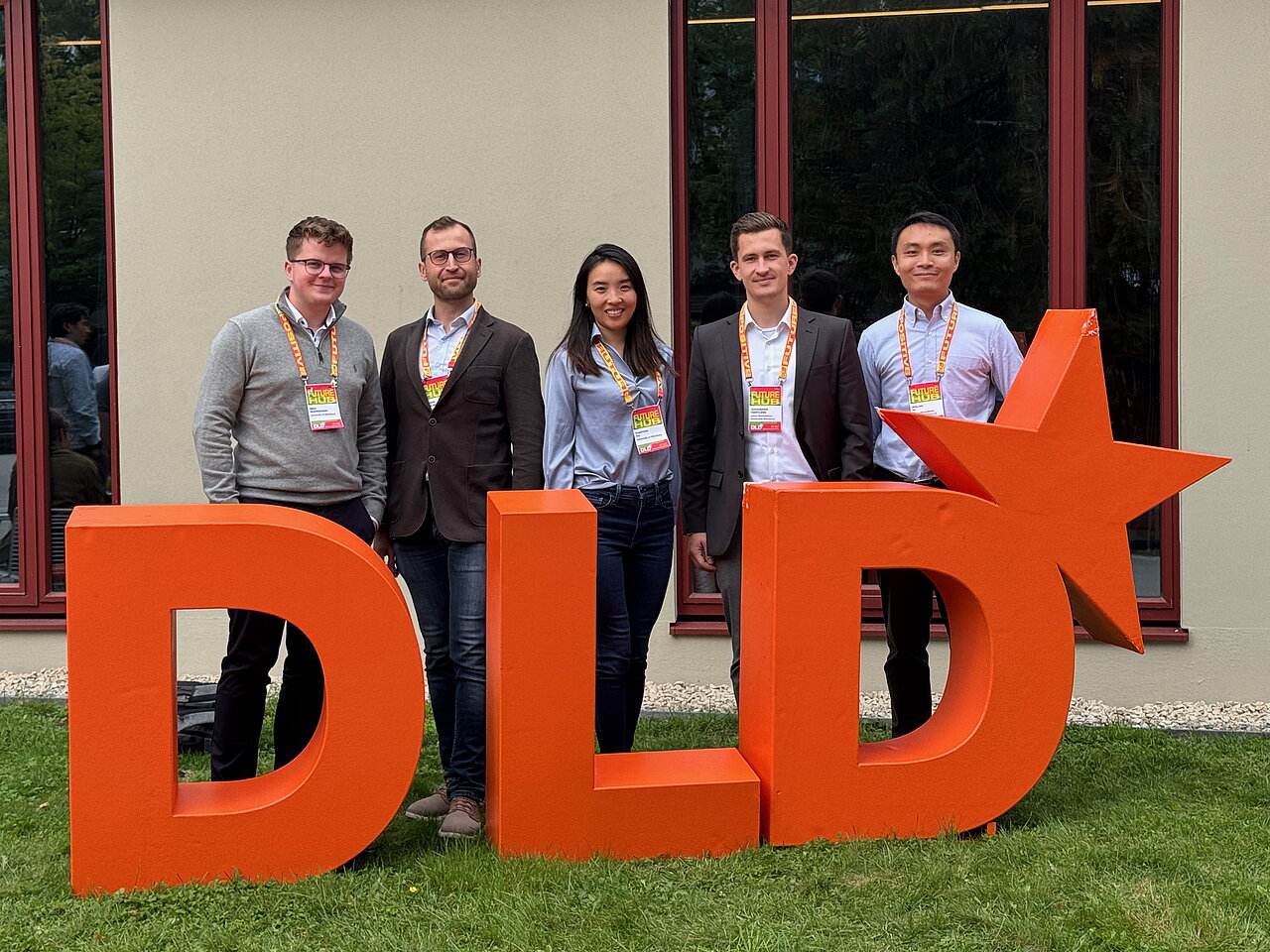
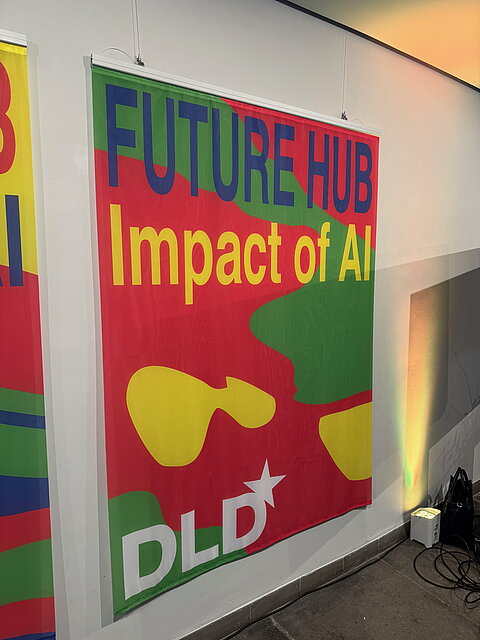
The Hilgendorf Chair took part in the DLD Future Hub: Impact of AI conference in Munich on 9 and 10 September. The event brought together leading representatives from science, business and politics - including OpenAI, Palantir, DeepL and Google as well as Minister President Markus Söder, members of the Bavarian state government and the European Parliament.
The aim of the conference was to shed light on current developments in the field of artificial intelligence, focussing in particular on technological, social and legal issues.
Key topics and contributions:
- AI and speechwriting: Terry Szuplat, former speechwriter for Barack Obama, emphasised that AI can primarily serve as an aid in structuring, shortening and finding quotes - however, the decisive authenticity must always come from the speaker themselves.
- Autonomous driving: Torsten Schön (TH Ingolstadt) emphasised the importance of external sensors such as LiDAR for safety and precision. Here there were direct links to the research work of our chair.
- Chip production in Germany: Prof Hussam Amrouch (TU Munich) made it clear that the development of our own 7-nanometre AI chips is a key prerequisite for digital sovereignty and data protection.
- AI and the labour market: Dr Amiram Appelbaum painted an optimistic picture: in the long term, AI will create more jobs than it will reduce - particularly in healthcare, science and communication. Nevertheless, risks for sectors such as production, transport and finance cannot be overlooked.
- Language translation: Stefan Mesken (DeepL) used a live demonstration to show the particular challenges of real-time translation, for example with complex German syntax.
- Humanoid robots: Alin Albu-Schäffer discussed the current limits of robotics. Widespread use of humanoid robots is not realistic for at least ten years, but robot systems could also help to counter the expected shortage of skilled labour in Germany.
- Construction and service robotics: Practical applications were presented - from autonomous construction robots to a wheelchair with a robotic gripper arm that could carry out certain tasks independently.
Topics such as dealing with bias in AI systems and new applications in astronomical data analysis were also covered.
Conclusion:
The conference provided an impressive overview of the current status and future challenges in the field of artificial intelligence. For the Chair, participation was a valuable opportunity to exchange ideas with players from industry, science and politics and to gain new impetus for its own research.
Back