Previous projects
The project:
German law, which is now characterised by European law, is widely used in many parts of the world and is rightly awarded the quality label Law Made in Germany by the Federal Ministry of Justice. This is due not least to the special orientation of German law towards the principles of the rule of law, democracy and the welfare state, and in the course of globalisation, the law also plays a decisive role as a location factor for companies. Widespread acceptance of the principles of the rule of law is favourable here because it makes the legal situation in the target markets transparent and, in principle, predictable. Despite some successes, the efforts to disseminate German law appear to be capable of improvement and it is the hitherto neglected task of the foreign science policy of law to promote this. The issue of a foreign science policy is also more important than ever from an international perspective. Global issues such as climate change, the supply of raw materials, but also the topics of flight and migration, most recently not only in view of the so-called refugee crisis of 2015/16 and the devastating fire in the Greek refugee camp Moria, demand answers that have so far been lacking, especially in the field of jurisprudence.
Members/supporters:
- Dr Tilo Klinner
Dr Klinner is a lawyer and was a civil servant in the Foreign Service of the Federal Republic of Germany for many years. After studying law in Würzburg, Lausanne and Montreal and obtaining his doctorate, he joined the diplomatic service in 1988. His career has included positions at the headquarters of the Federal Foreign Office and at various German missions abroad, including Moscow, Beijing, Karachi and Astana. From 2021 to 2024, he was Ambassador to Uzbekistan. His work focussed on international economic and technology policy and public relations.
- Prof Dr Dr Eric Hilgendorf
Prof Hilgendorf is Professor of Criminal Law, Criminal Procedure Law, Legal Theory, Information Law and Legal Informatics at Julius-Maximilians-Universität Würzburg. He studied philosophy, history and law in Tübingen and was awarded doctorates in both philosophy and criminal law. He qualified as a professor in 1996 and has been teaching in Würzburg since 2001. His research specialisms include media criminal law, philosophy of law and European criminal law. He is also active in various academic committees.
Publications and literature:
Hilgendorf, Eric: From legal development aid to legal dialogue in: FS Roxin, vol. 2, pp. 1451-1463.
Hilgendorf, Eric: Die ausländische Strafrechtswissenschaft in Selbstdarstellung, Berlin 2019.
Hilgendorf, Eric: Die deutschsprachige Strafrechtswissenschaft in Selbstdarstellung, Berlin 2010.
Schütte, Georg: The race for knowledge. Außenwissenschaftspolitik im Zeitalter der Wissensrevolution, Berlin 2008.
Schütte, Georg: Außenwissenschaftspolitik, in: Simon, Dagmar et al. (eds.): Handbuch Wissenschaftspolitik, 2010.
Kirste, Stephan (ed.): Interdisziplinarität in den Rechtswissenschaften, Berlin 2016.
Global System Intercultural Competence (GSiK-Jura)
The Hilgendorf Chair's "Global Systems and Intercultural Competence" project was dedicated to analysing intercultural issues in a legal context. In an increasingly globalised world in which contact with different cultures is part of everyday life, the project represented a targeted response to the growing challenges in dealing with cultural diversity - for example in connection with topics such as honour killings, religious symbols in public spaces, migration or intercultural conflicts in the legal system.
The aim of the project was to teach prospective lawyers basic intercultural skills - a key qualification of the 21st century. To this end, a varied programme of seminars, workshops and lectures was created, inviting students to engage with intercultural issues in an open, differentiated and rational manner. The events encouraged independent research and critical opinion-forming, far removed from preconceived positions.
After attending five events and passing a written exam as part of the vhb course "Interculturality, Ethics and Law", participants were able to obtain a certificate documenting their commitment to intercultural competence. The course provided the necessary tools for a fundamental understanding of the interactions between law and culture and at the same time prepared participants for the state examination in law.
In addition, the project offered particularly committed students the opportunity to actively participate in the student working group, submit their own topic suggestions and organise events together with the GSiK law team.
The project has since been completed and is now one of the early initiatives in the field of intercultural education.
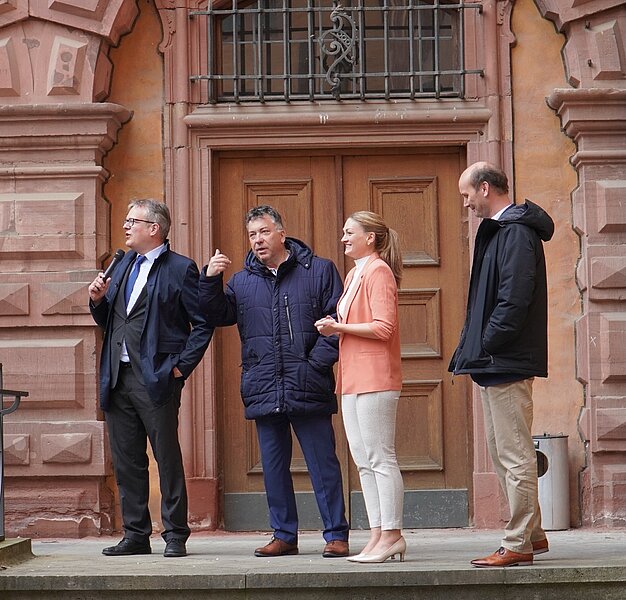
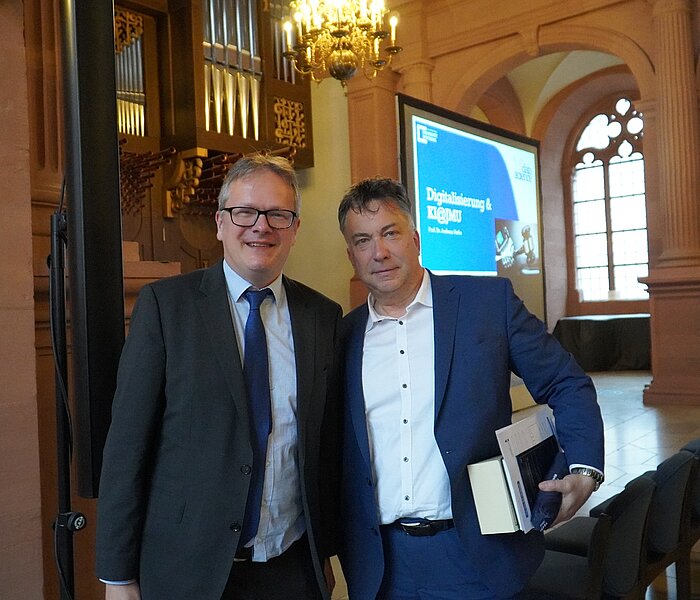
On 20 April 2023, the Bavarian Minister of State for Digital Affairs, Judith Gerlach, MdL, visited the Faculty of Law at the University of Würzburg.
Reception and welcome by the Dean of Studies
The Dean of Studies, Professor Dr Frank Schuster, welcomed the Minister on her arrival at 5 p.m. in the courtyard of the Old University.
The Minister's visit coincided with Freshers' Week, an event organised by the Dean of Studies' Office and developed by the Law Alumni Würzburg, which offers students a variety of introductory and information events at the beginning of their studies. As part of Freshers' Week, the student council also organises a rally in which students take part in mini-games at many different stations in Würzburg city centre.
To mark the visit of the Digital Minister, the student council and Juristen Alumni Würzburg e.V. cooperated to organise the first semester rally as a digital rally for the first time. To this end, the student council also organised a bingo, for the winners of which the Law Alumni funded prizes.
Opening of the Fresher's Rally by the Bavarian Digital Minister
As part of the Minister's opening speech at the rally, she told the curious students in their first semester about their time at university and the importance of a healthy "study-life balance".
Introduction by the Dean of Studies in the Neubaukirche
The students were then released for the digital rally and the minister's visit moved to the Neubaukirche. After introductory words from the Dean of Studies, Professor Dr Frank Schuster, the Minister of State presented the recently introduced Bavarian digital strategy.
Due to the scope of the Bavarian digital plan, which includes over 200 measures, the Minister was of course unable to go into all the points. However, she did mention in particular the model project of the already successful digital toolbox for local authorities, which will be further expanded in order to improve cooperation between local authorities, companies and citizens. The so-called BayernPackages, with which the Free State of Bavaria provides a package of ready-to-use online services that can be used immediately, are intended to ensure that all relevant administrative services are available online to all citizens and companies by the end of 2024. Ms Gerlach particularly emphasised the strengthening of employees' digital skills. After all, digital services provided by the federal government, federal states and local authorities always require staff who must be able to use them.
After the presentation of the digital plan, there was an opportunity to put questions to the Digital Minister. The topics ranged from non-functioning Wi-Fi in university buildings to specific questions regarding the implementation of the more than 200 measures announced.
Lecture by Professor Hotho on digitalisation at the University of Würzburg
Ms Gerlach's presentation was followed by an insight from Professor Hotho(Chair of Computer Science X and spokesperson for CAIDAS) into digitalisation and digitalisation efforts at the University of Würzburg.
Truth and Correctness in Trial and Criminal Law: Philosophical and Legal Dogmatic Perspectives(Duration: July 2019 - August 2022)
The project is dedicated to central concepts of the application and interpretation of law: Truth and rightness in the context of criminal law. The aim was to shed light on these concepts from both a philosophical and a legal dogmatic perspective and to critically reflect on their significance for criminal proceedings and judicial decision-making.
Although events were originally planned for the entire duration of the project, the workshop planned for March 2020 had to be cancelled due to the pandemic. However, a central event of the project could be held in July 2022 and at the same time embedded in an international conference: From 28 to 30 July 2022, the event "Criminal Justice in Germany, Latin America and Spain" took place at the Julius-Maximilians-Universität Würzburg. It was organised by Prof. Dr Dr Eric Hilgendorf (Würzburg) in cooperation with Prof. Dr Luis Emilio Rojas (Universidad Alberto Hurtado) and with the support of the Alexander von Humboldt Foundation and Juristen Alumni Würzburg e.V.
The three-day conference focussed on international academic exchange on fundamental questions of criminal law. The conference kicked off with the workshop "Truth and Correctness in Law - Philosophical Perspectives on the Administration of Justice", in which renowned academics such as Prof. Dr Dr Marcelo Sancinetti (Buenos Aires), Leandro Dias, LL.M., and Lucila Tuñón, LL.M., contributed papers on topics such as false testimony, judicial perjury and moral truth.
On the second day, the commemorative publication "Building Bridges" was presented at a ceremony in honour of Prof. Dr. Dr. h.c. Marcelo Sancinetti was presented. The keynote speech by Prof. em. Dr Dr h.c. mult. Wolfgang Frisch focussed on the history and problems of objective attribution theory.
The conference was rounded off by a two-day scientific tour of the works in honour of Prof. Dr. Dr. h.c. Jesús-María Silva Sánchez, during which numerous experts from Germany, Latin America and other countries analysed and discussed his contributions to criminal law.
The project promoted international professional exchange and opened up new perspectives on fundamental questions of criminal law.
10.05.
14:00: City tour
(if interested)
Meeting point:
In front of the Old University Domerschulstraße 16
18:00: Welcome in lecture theatre I
18:15 : The regulation of the end of life as a legal challenge
Prof. Dr Dr h.c. mult. Albin Eser, Max Planck Institute of Criminal Law and Criminology Freiburg
Reception afterwards
11.05.
from 08:00 a.m.: Registration
09:00 a.m.: Opening of the conference
09:15 a.m.: Euthanasia in Germany. The perspective of criminal law
Jun.-Prof. Dr Elisa Hoven, University of Cologne
10:30 a.m.: On the development of palliative and hospice medicine: a view from practice
Dr Rainer Schäfer, Chief Physician at Julius-Spital Würzburg
11:45 a.m.: Lunch break
14:00: The legal framework of palliative and hospice medicine
Prof. Dr Volker Lipp, Georg-August-Universität Göttingen
15:15: Patient autonomy at the end of life
Prof. Dr Dr h.c. Jan C. Joerden, European University Viadrina Frankfurt/Oder
16:30 hrs: Coffee break
17:00: On the use of robots in palliative and hospice care
Prof. Dr Susanne Beck, Leibniz University Hanover
18:15: Discussion of the medical law teachers
19:00: Wine tasting and dinner
12.05.
09:00: Over-therapy - causes and solutions
Prof. Dr Constanze Janda, German University of Administrative Sciences Speyer
10:15 a.m.: The Swiss perspective - living wills and decision-making powers at the end of life
Prof. Dr Regina Aebi-Müller, University of Lucerne I
11.30 a.m.: Lunch break
14:00: Euthanasia: The theological perspective
Prof. Dr Hartmut Kreß, Rheinische Friedrich-Wilhelms-Universität Bonn
15:15: Debate: On the future of euthanasia
Prof. Dr Dr h.c. Dieter Birnbacher, University of Düsseldorf
Prof. Dr Gunnar Duttge, University of Göttingen
Moderation: Prof. Dr Dr Eric Hilgendorf
16:15: End of the event
17:00: Joint excursion to Veitshöchheim
The project "Würzburg Summer School 2018 - Digitalisation and Law" was an international summer school organised by the chair of Prof. Dr. Dr. Eric Hilgendorf, which took place at the University of Würzburg from 30 July to 3 August 2018. The event focused on the effects of digitalisation on the law, in particular on criminal law. Prof Dr Dr Eric Hilgendorf gave key lectures on topics such as Law and Innovation, Internet Yesterday, Today, and Tomorrow, Automated Industry, Autonomous Cars and Robots - Our New Partners!? Other contributions included an introduction to the German legal system by Dr Karin Linhart, Prof. Dr Sancinetti (Argentina) and Roger Fabry on the case law system. The programme was supplemented by presentations from the participants, a written final test and an accompanying supporting programme.


The Competence Centre Digitalisation and Law (KDR) was founded in 2018 at the Chair of Criminal Law, Criminal Procedure, Legal Theory, Information Law and Legal Informatics of Prof. Dr Dr Eric Hilgendorf . It is aimed directly at small and medium-sized enterprises (SMEs) from northern Bavaria by focusing on practical problems at the interface between digitalisation and law. The competence centre was partly funded by the European Social Fund (ESF) and took part in the MA-Netze-DiReKT project of the Faculty of Law.
Digitalisation is changing all of our lives. The pace of change and the significance of these changes for our entire living and working environment are probably unprecedented. It is therefore of paramount importance that technology continues to serve people in the future and not the other way round.
The defence of this fundamental human and public welfare orientation of technology is not least the task of the law. It should tame technological development and keep it on an orderly course. All areas of the legal system are important here: the constitutional foundations, in particular human dignity and fundamental rights, the civil liability regime with fault and strict liability, criminal law as the state's sharpest weapon in defence of overridingly important legal interests, but also data protection law, road traffic law, insurance law and many other areas of law.
Against this background, the Robot Law Research Centre was founded at the Faculty of Law at the University of Würzburg back in 2010. This centre has set itself the task of researching the relevant legal issues in close cooperation with disciplines such as scientific technology assessment, engineering, ethics and economics.
The new Competence Centre Digitalisation and Law is intended to prepare the results of this work in a generally understandable way and communicate them to a broader public. Our focus is on the economy of Mainfranken: the competence centre is aimed directly at small and medium-sized enterprises (SMEs) from northern Bavaria by focusing on practical problems at the interface between digitalisation and law. As part of lectures, workshops and working group meetings, participants are made aware of the legal problem areas of digitalisation and are shown possible solutions that they can transfer to their individual companies.
Five events were held as part of the project in 2018 and 2019.
The kick-off event on 19 July 2018 was entitled "Legal challenges for small and medium-sized enterprises", at which Prof. Dr Dr Eric Hilgendorf first introduced the competence centre. Nicolas Woltmann then spoke on "Practical problems of self-learning systems" and Paul Vogel on "EU GDPR: Challenges for SMEs".
On 1 October 2018, a workshop was held on the topic of "Ethics and law in the field of artificial intelligence". The aim of the workshop was to identify and analyse individual problem areas in the field of AI and then jointly develop potential solutions.
As numerous individual questions relating to digitalisation processes in medical practices and hospitals were received after the kick-off event, a workshop on the legal aspects of digitalisation in medical practices was held on 10 January 2019. The event focused on data protection law, which was presented by the two research assistants Dr Severin Löffler and Paul Vogel using a questionnaire.
The international conference "Digitisation, Artificial Intelligence and Law" followed on 14 and 15 March 2019 in the Toskana-Saal of the Residenz. Information on the conference can be found on the website of the RobotRecht research centre.
On 14 October 2019, the themed afternoon "Ethics and Law of Autonomous Systems" took place. There were presentations on the "Legal framework of autonomous systems" by Eric Hilgendorf, Anna Lohmann and Annika Schömig, "Philosophical aspects of software agents" by Julian Nida-Rümelin and Antonio Bikić, "Technology in autonomous cars: a look at the present" by Alexandra Kirsch and Adriano Mannino, followed by a panel discussion.
The VHB e-learning course "Interculturality, Ethics and Law" (from winter semester 2014/15) - innovative and flexible learning "along the way"
The basic principles:
1. studying at the cutting edge
The course is dedicated to a highly topical subject area that is relevant to everyday life.
2. interdisciplinarity:
New perspectives enrich the programme. A regular look "outside the box" of your own discipline not only brings variety to your studies, but also counteracts specialised idiocy.
3. flexibility & individuality:
The course can be completed on a PC/laptop or via a tablet or smartphone. The time of day, location and duration of the course can be determined according to your own learning needs - whether it's 15 minutes in between on the bus, in the university library or cosily on your sofa in the evening, you decide for yourself.
Tip for Würzburg students: You can "surf" here free of charge:
- Café im Max-Stern-Keller (Alte Universität)
- Uni Café
- Café Jenseits
- Zaubergarten
- Chelsea
- Café zum schönen René
- Markt 7
- Marienplatz
What is the course about?
Culture, ethics and law are concepts that are relevant in many ways in our globalised world. The interactions at the interface are manifold and we are often unaware of them in our everyday behaviour. What we morally perceive as right and wrong is directly linked to our socio-cultural background.
However, not only the subjective perception of law, but also written law is a "cultural phenomenon". Its interpretation, interpretation and further development can always be traced back to cultural values - in short: law is culture. If we are only familiar with our own legal system, it is difficult for us to recognise the extent of its cultural conditionality (cf. Schroll-Machl 2007). Such "blind spots" in our individual perception can have fatal consequences, especially in (intercultural) professional practice - in a legal context, for example, in the context of a court case.
Only by engaging with the "other" and the "unfamiliar" can we open up new perspectives and ultimately enable us to reflect on and become more aware of our own culture.
What can I expect?
The course "Interculturality, Ethics and Law" focusses on the dimensions of meaning and specific interactions of these concepts. It aims to lay the foundation for a cultural change of perspective and the development of intercultural competences. An essential part of the course is the examination of human rights and cultural values (theoretically and practically in the context of intercultural legal cases).
As a course participant, you can expect a varied mixture of cognitive and experience-orientated learning content. The basis is learning with index cards, which will gradually provide you with basic legal and cultural knowledge and also train your analytical thinking. Creative methods, such as mind mapping and brainstorming, are not neglected. In addition to the index cards, reading texts, video clips, short exercises and learning checks support the internalisation of the learning content.
FAQ - Frequently asked questions about the course:
Who is the course designed for? Is any prior knowledge required?
The course has been designed for students from all subject areas and does not require any specific prior knowledge. As the specific interactions between the concepts of culture and law are the main focus, the course is a very useful addition to regular courses, especially for students of law and cultural studies / foreign language philology. For students of all other subjects, it offers a double benefit: an introduction to law and to cultural studies.
Who is behind this e-learning course? How was it created?
The e-learning course is the result of an interdisciplinary collaboration between three young academics at the University of Würzburg, whose areas of expertise lie in law and cultural studies, South Asian studies, education and English studies.
To the course on vhb.org.
"eGovernment in Europe, Germany and Greece" - Workshop in Thessaloniki
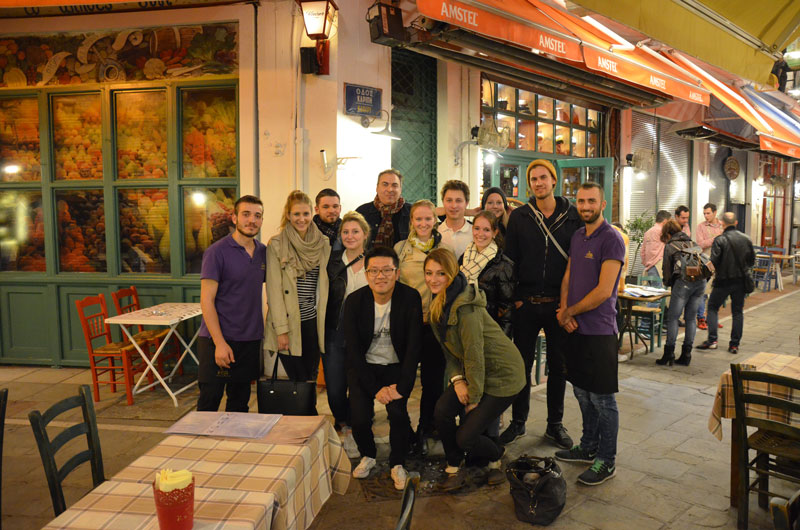
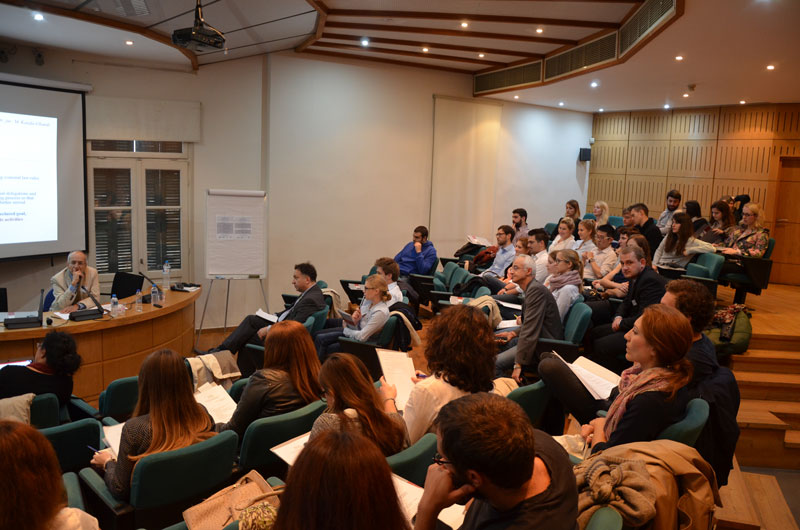
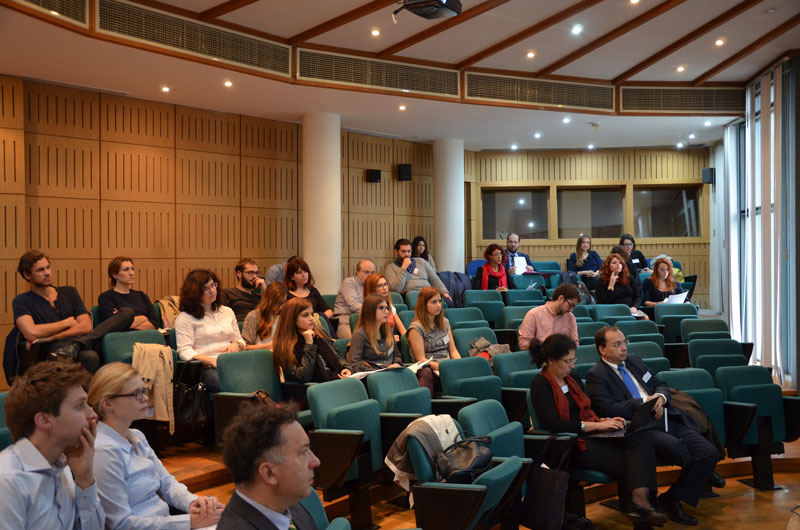
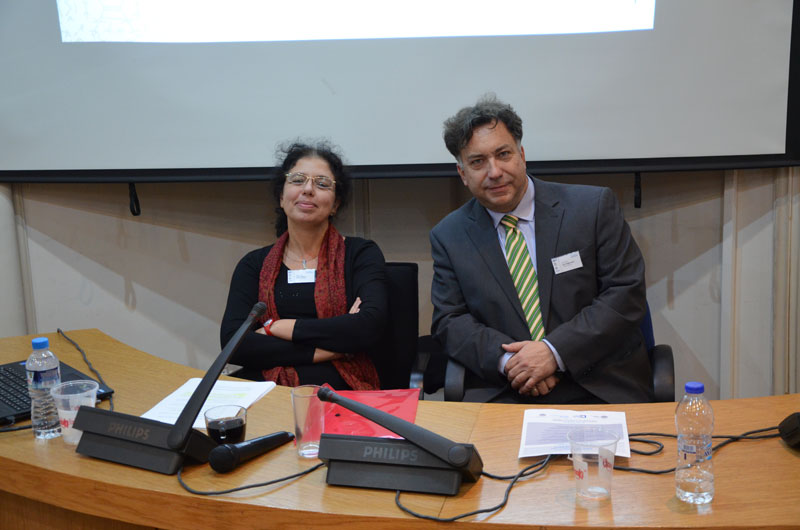
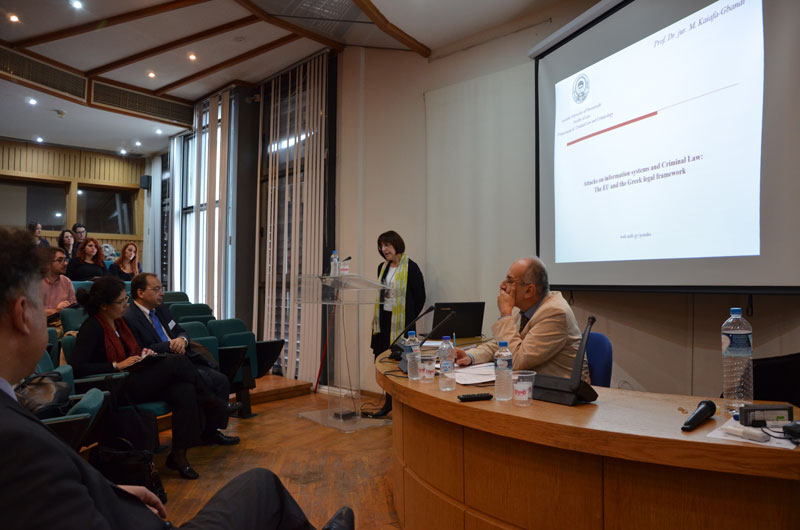
Under the title "eGovernment in Europe, Germany and Greece", Greek and German academics and students met in Thessaloniki from 21-27 October 2015 for presentations and discussions. The conference of this year's DAAD workshop took place in the premises of the Thessaloniki Bar Association. Following an introductory lecture by Prof. Dr Dr Eric Hilgendorf (Chair of Criminal Law, Criminal Procedure, Legal Theory, Information Law and Legal Informatics, University of Würzburg), the Chair of Criminal Law and Criminal Procedure, Prof. Dr Maria Kaiafa from the partner university in Thessaloniki, spoke about legal issues relating to attacks on information systems. Representatives from the universities of the Aegean, Hamburg and Macedonia also gave presentations on the topic.
An interesting insight into the practical implementation of eGovernment was provided by project manager Julia Kloiber from "Code for Germany", an initiative that has set itself the goal of improving transparency and open data with the help of informative apps for citizens and administration.
The last workshop day, themed "Students Day", offered students and doctoral candidates a platform for their own presentations.
The last two days were dedicated to cultural exchange between Greece and Germany and were used by the participants to familiarise themselves with the country and its people.
An intercultural teaching project to teach German law in Turkey
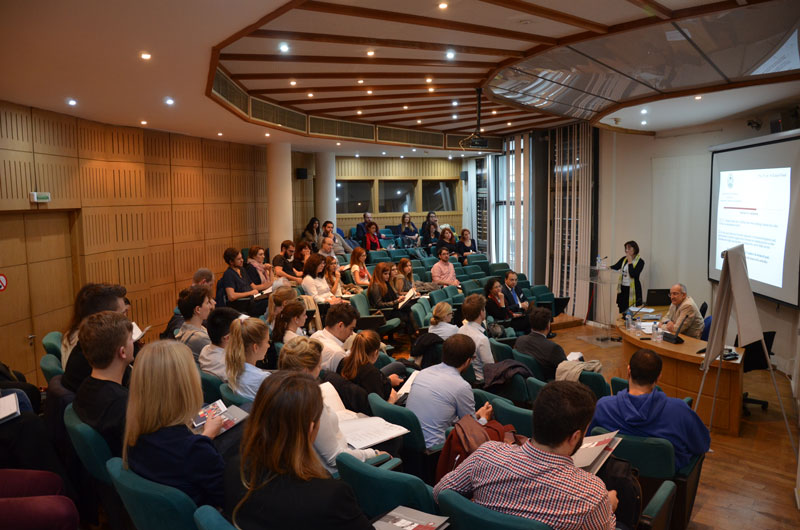
Since the summer semester of 2010, the chair of Prof Dr Dr Eric Hilgendorf has regularly offered courses on German law at Bahçeşehir University in Istanbul. The aim of the project was to promote academic exchange between German and Turkish students and to expand international legal co-operation. The initiative was initiated by Prof Hilgendorf and Prof Dr Feridun Yenisey, who had already been a guest at a conference in Würzburg in 2008 - a contact from which this long-term collaboration developed.
As part of the so-called "Würzburg Weeks", compact introductory courses were offered in central areas of German law. The events were aimed at students as well as practitioners, such as lawyers or police representatives. The lectures were supplemented by practical case discussions in small groups, which deepened the theoretical knowledge and encouraged discussion.
1st Würzburg Week (26-30 April 2010)
The programme kicked off with courses on German constitutional law, criminal law and civil law (with a focus on the law of obligations, property law and family and inheritance law). Around 70 participants - including students from various Istanbul universities and practitioners - took part in the week. The intensive discussion following the lectures showed the great interest in the German legal system.
2nd Würzburg Week (18-22 April 2011)
The second Würzburg Week dealt with other areas of law in greater depth: Sales law, labour law, administrative law, fundamental rights and criminal procedural law. In addition to the lectures, small group lessons took place in which norms and legal argumentation were practised on the basis of example cases.
Five years of the Turkish Penal Code
The aim of the conference is the German-Turkish exchange of criminal law findings, in particular the examination of the influences of continental European law on the Turkish Criminal Code in the light of the comprehensive Turkish criminal law reform of 2005. The particular relevance of this endeavour stems from the fact that essential parts of German criminal law (especially the General Part of the German Criminal Code) were adopted in the Turkish Criminal Code of 2005. The interest of Turkish criminal law scholars in the basic questions and problems of German criminal law is therefore immense. For the latter, this opens up the attractive possibility of a far-reaching export of knowledge. On the other hand, it will have the opportunity to place its own tried and tested concepts in a new context, thereby broadening its view of them with an interesting perspective. Finally, the conference offers a forum for communicative exchange, which will promote intercultural understanding in both societies.
The conference is based on the following concept: A Turkish participant will give a lecture on a relatively well-defined complex from the new Turkish criminal law (e.g. causality, self-defence, etc.), whereby problems will be addressed and difficulties of reception will be discussed. The co-presentation will be given by a German colleague who will address the issue from the perspective of German criminal law, make references and formulate proposals for solutions. In the subsequent discussion, common positions can be found and different approaches can be familiarised with and discussed.
24 June 2010 | |
25 June 2010 | |
09.15 a.m. | Opening Prof. Dr Dr Eric Hilgendorf / Dr Silvia Tellenbach |
10.00 a.m. | Causal connections in Turkish criminal law Prof. Dr Yener Ünver (Yeditepe University Istanbul) |
11.00 a.m. | COFFEE BREAK |
11.15 a.m. | Insult in Turkish criminal law Prof Dr Hakan Hakeri (University of Ondokuz Mayis Samsun) |
12.15 pm | Security measures in the Turkish Criminal Code (Art. 50-60 t-StGB) Prof Dr Emin Artuk (Marmara Istanbul University)Co-speaker: Prof Dr Bernd Heinrich (HU Berlin) |
1.15 pm | LUNCH BREAK |
3.00 pm | Deprivation of liberty in Turkish criminal law (Art. 109 t-StGB) PD Dr Özlem Yenerer Cakmut (Marmara University Istanbul)Co-speaker: Prof. Dr Walter Perron (University of Freiburg) |
16.00 hrs | Offences against private life and privacy (Art. 132-140 t-StGB) Prof. Dr Bahri Öztürk (Kültür Istanbul University)Co-speaker: Prof. Dr Dr Kristian Kühl (University of Tübingen) |
5.00 pm | CITY TOUR |
19.00 hrs | DINNER TOGETHER |
26 June 2010 | |
09.15 a.m. | Error in the Turkish Criminal Code (Art. 30 t-StGB) Doz. Dr Baris Erman (Bilgi Istanbul University) |
10.15 a.m. | Negligence in the Turkish Criminal Code (Art. 22 t-StGB) Gülsün Ayhan Aygörmez (currently at the University of Bielefeld) |
11.15 a.m. | COFFEE BREAK |
11.45 a.m. | Suspended sentence in Turkish criminal law Prof. Dr Nur Centel (Marmara University Istanbul) |
12.45 pm | LUNCH BREAK |
2.30 pm | Distribution of pornographic writings in Turkish criminal law (Art. 226 t-StGB) Prof. Dr Veli Özer Özbek (Dokuz Eylül University) |
| 3.30 pm | END OF THE SECOND CONFERENCE DAY |
27 June 2010 | |
Concept of the conference
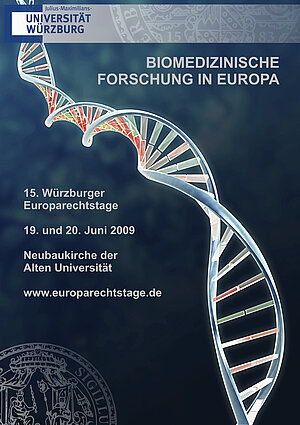
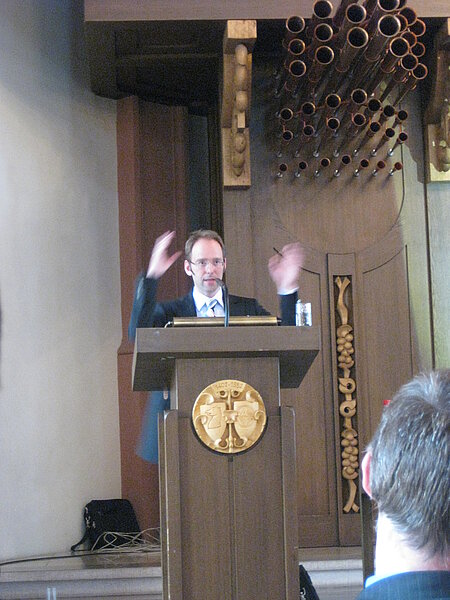
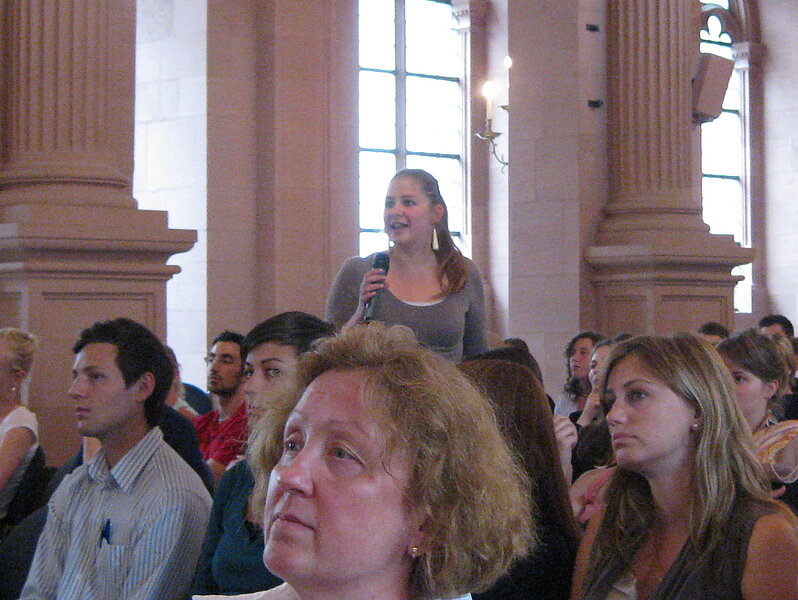
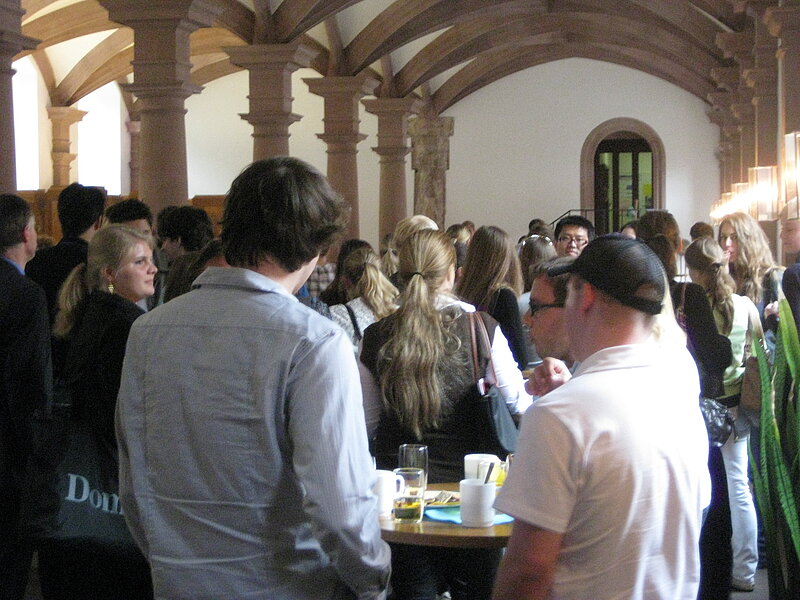
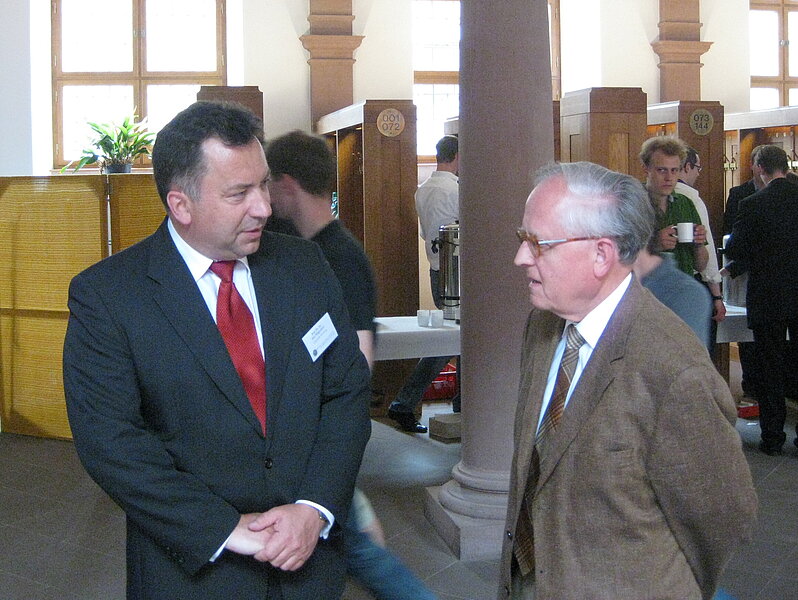
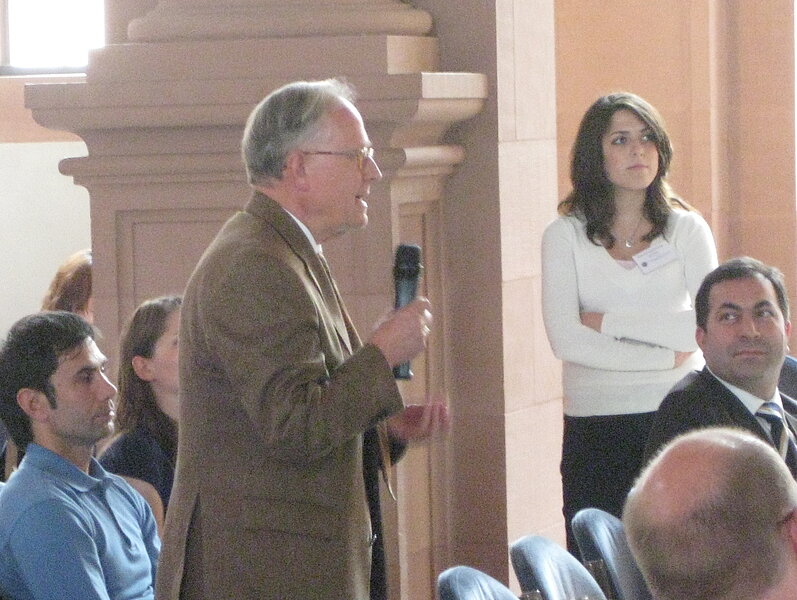
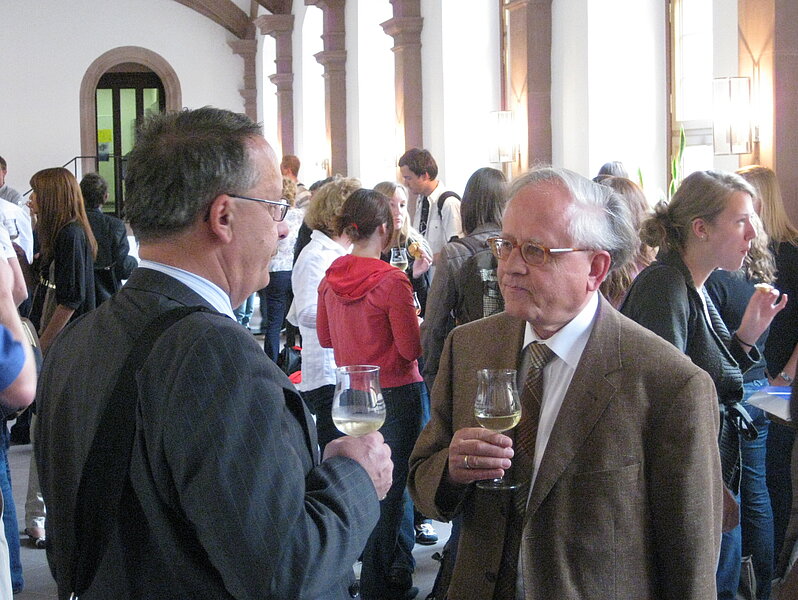
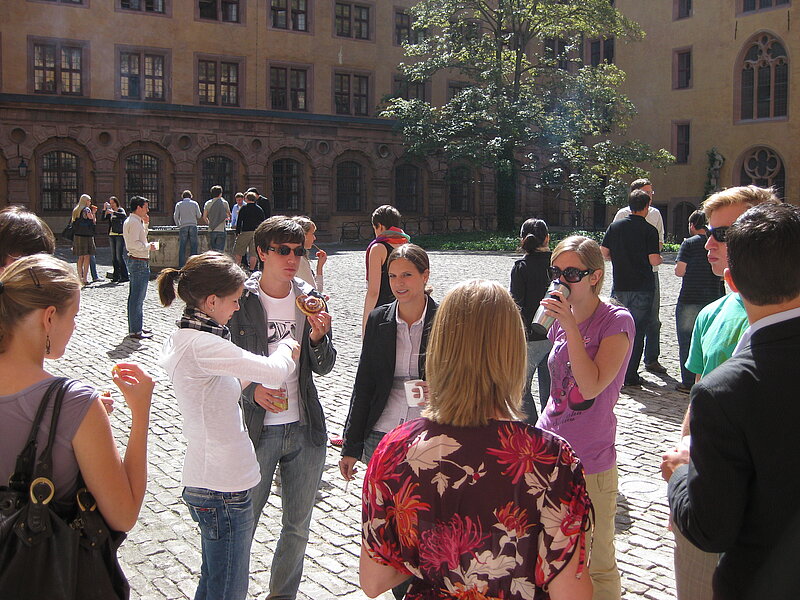
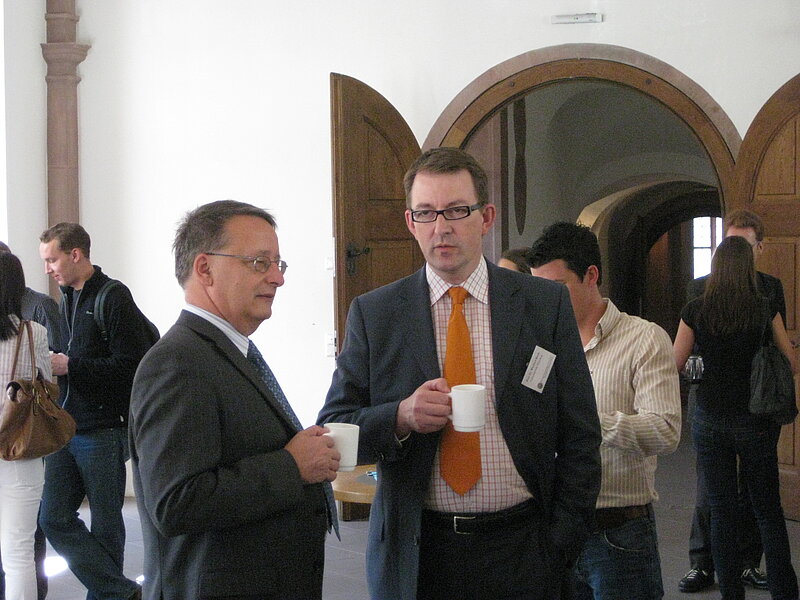
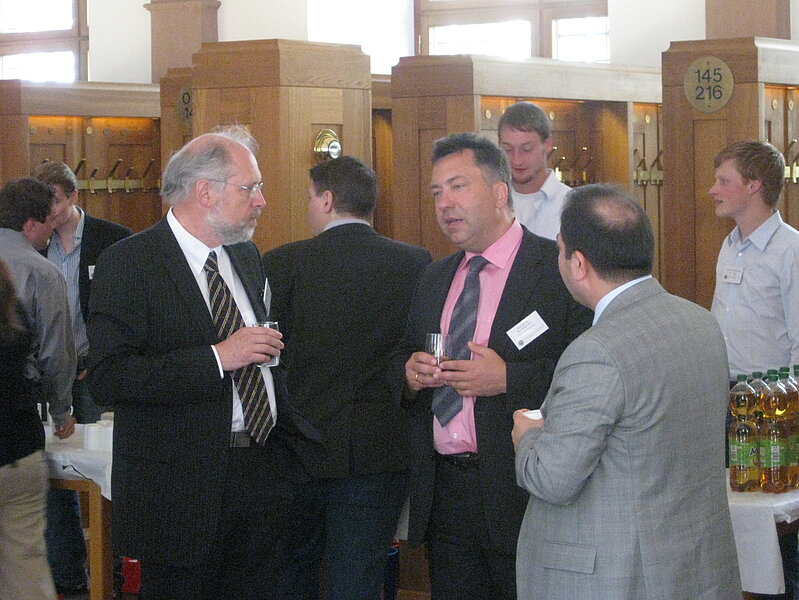
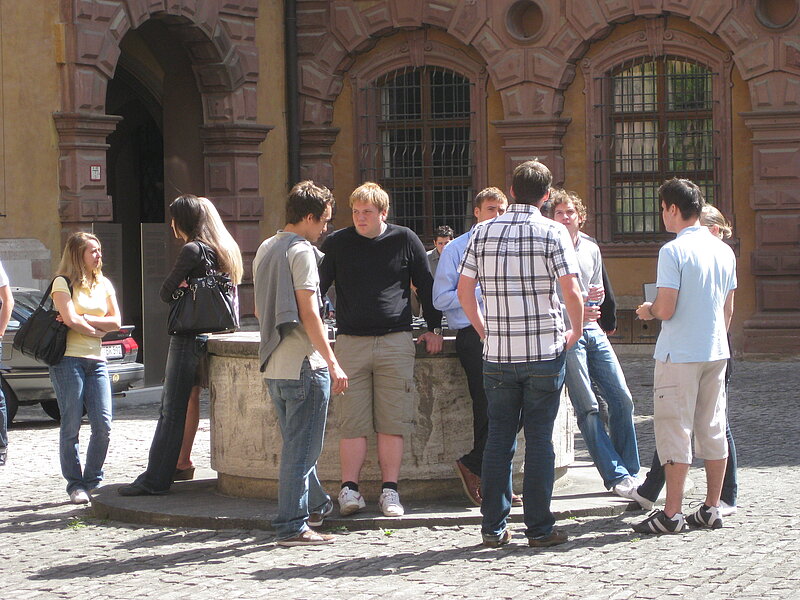
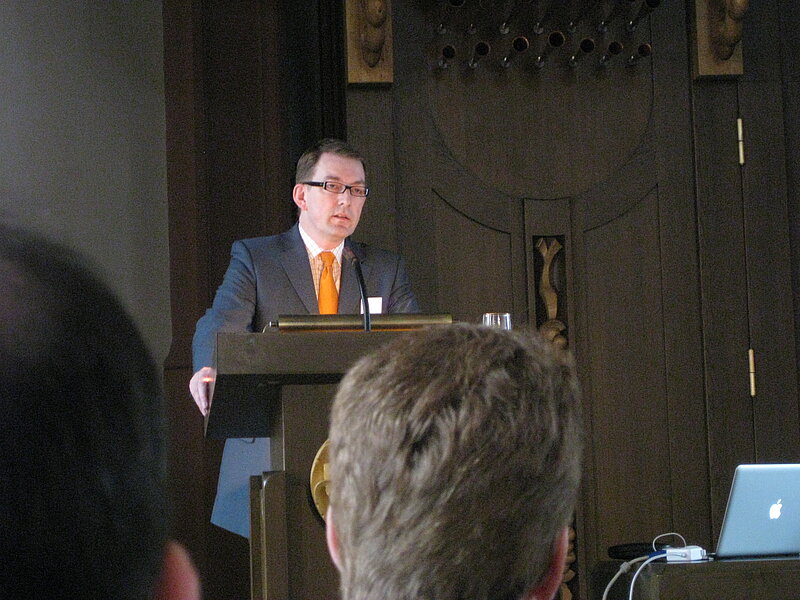
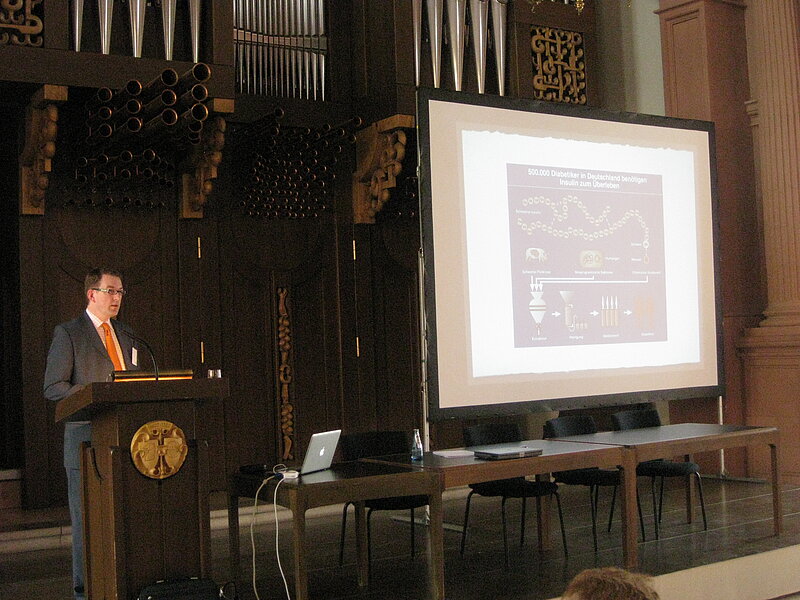
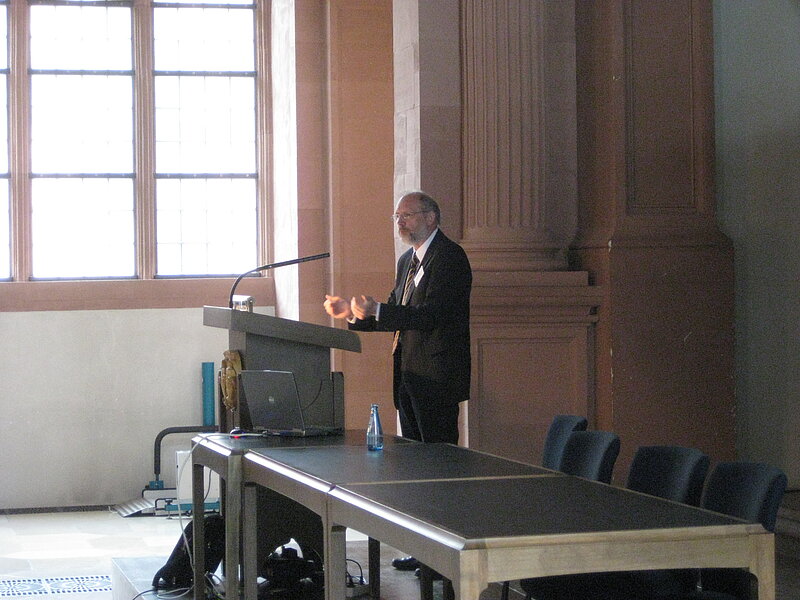
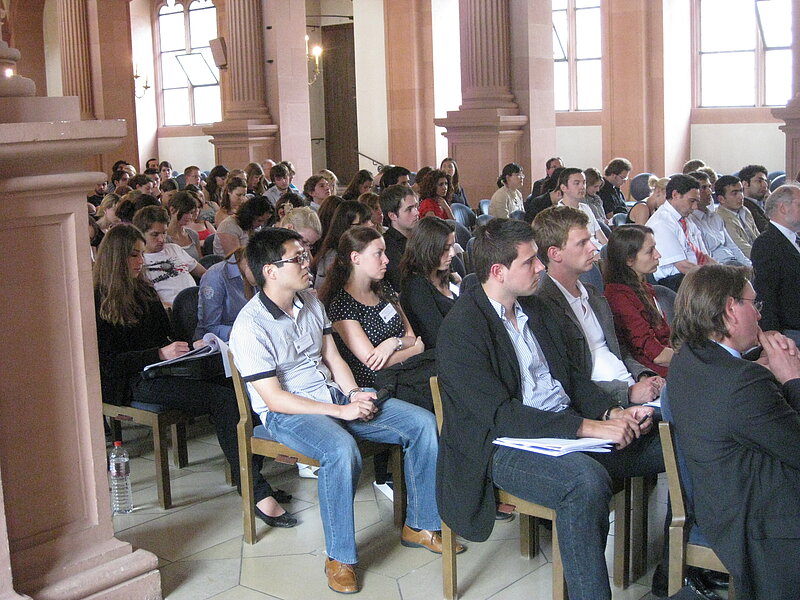
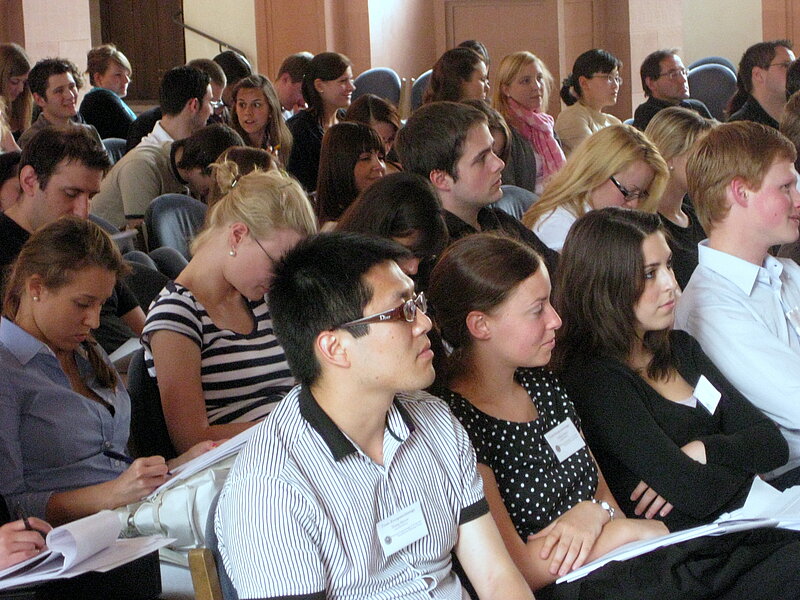
"Europe's medical research is not good enough, medical care is too expensive and our pharmaceutical industry is not competitive in the world"; these are the very clear findings of Prof Liselotte Hojgaard, Chair of the European Medical Research Council (EMRC). The current White Paper "Future Strategy for Medical Research in Europe" shows that medical research in Europe is lagging far behind international competition and that urgent measures need to be taken to improve it.
These include more intensive research funding, institutional strengthening - including through the newly founded EMRC - and a streamlining of European regulations that hinder research. A not insignificant problem for research is the diverse and sometimes contradictory levels of legal regulation. The need to bring different cultures to a common legal denominator causes conflicts and slows down research. Germany and Italy, for example, are opposed to Europe's permissive attitude towards embryo and stem cell research, and there is considerable disagreement regarding the eligibility for funding of genetic engineering research projects, the way in which medical research is financed and the desired results.
This disagreement cannot simply be ignored or regulated away, as it is rooted in national cultures and moral concepts. The idea of "Europe" is also based on respect for these differences and the attempt to integrate them. The individual states should therefore continue to be able to decide how they want to balance the freedom of research and the benefits arising from it on the one hand with the possible threat of taboo violations, limited financial resources or feelings of social threat on the other. For the competitiveness of European medical research, there is an urgent need to pool resources and skills from across Europe and develop joint strategies. A compromise must therefore be found between the justified national characteristics and the no less justified overall European interests. A first step in this direction is to review and analyse the problematic situations, their theoretical backgrounds and the development of possible solutions.

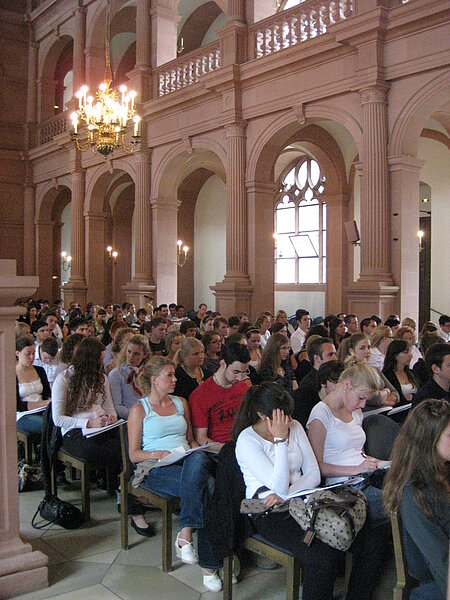
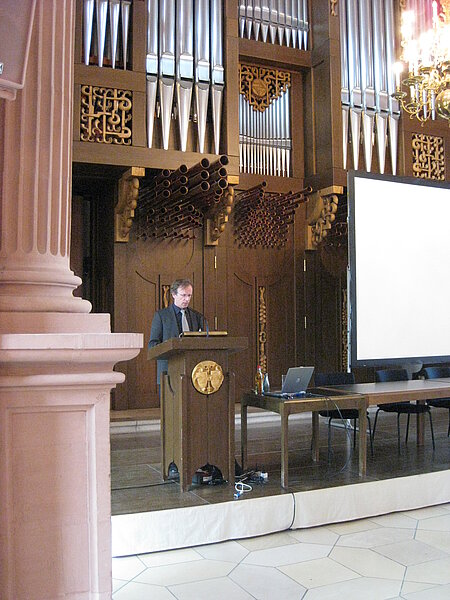

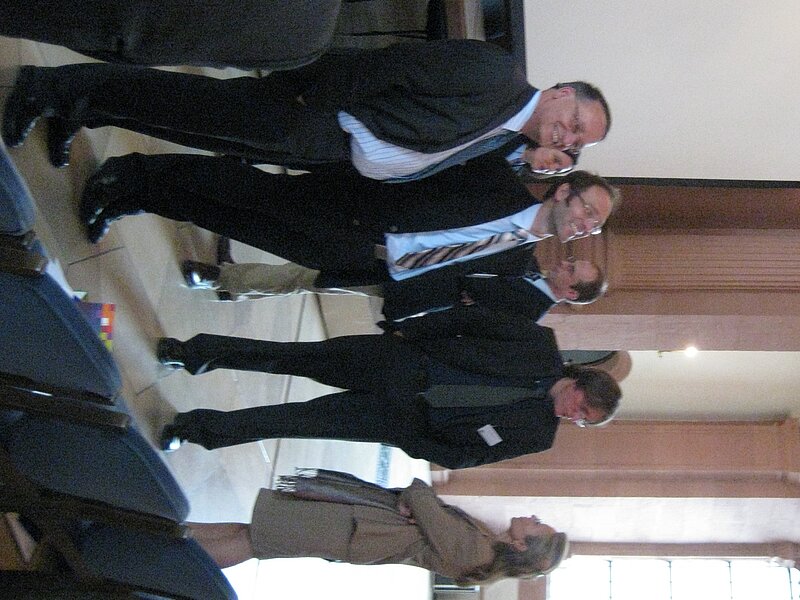
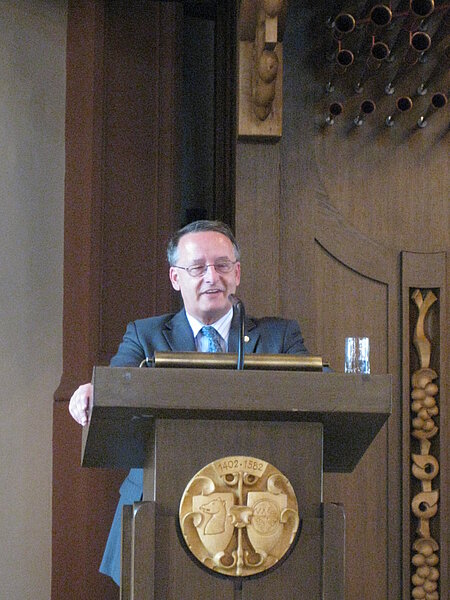
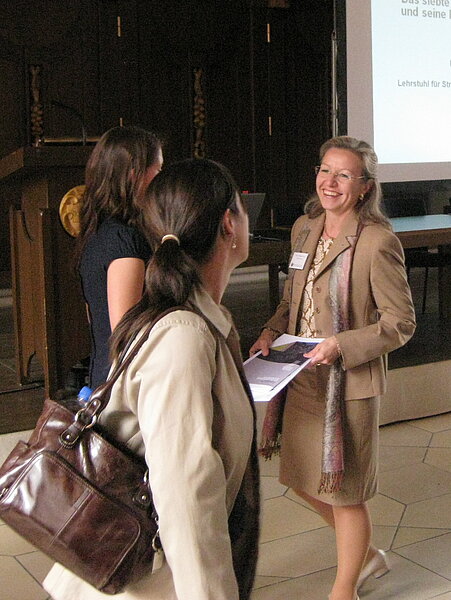
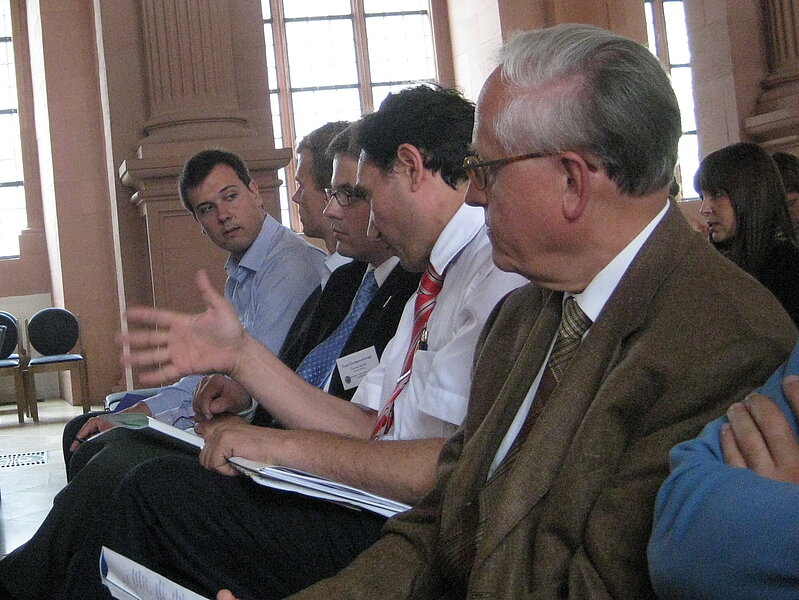
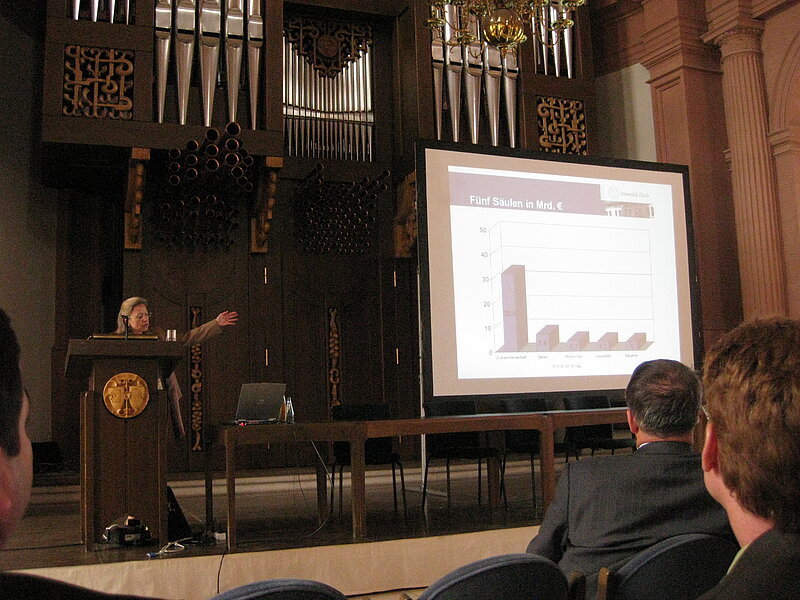
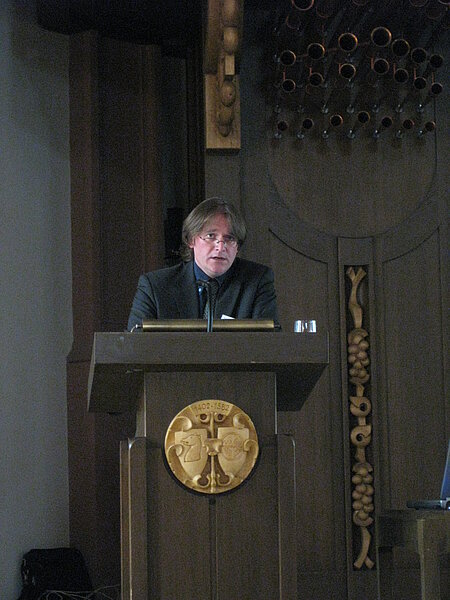

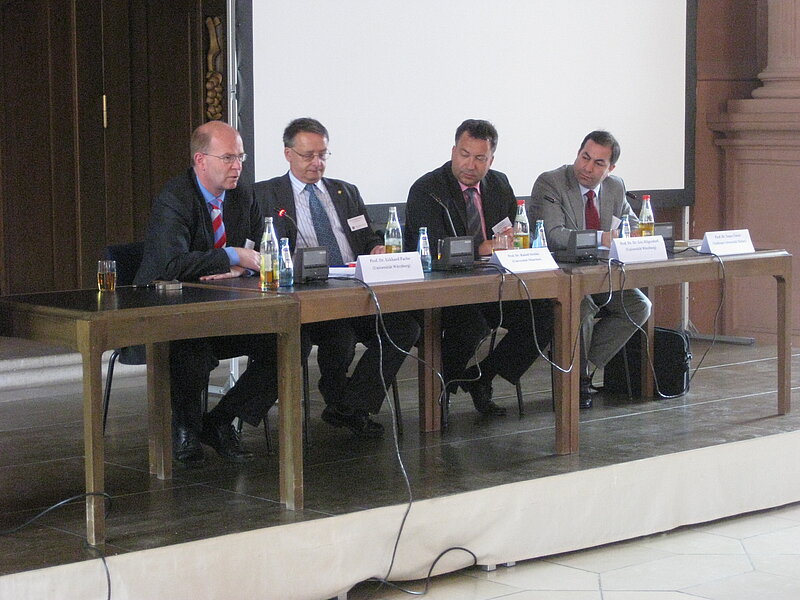
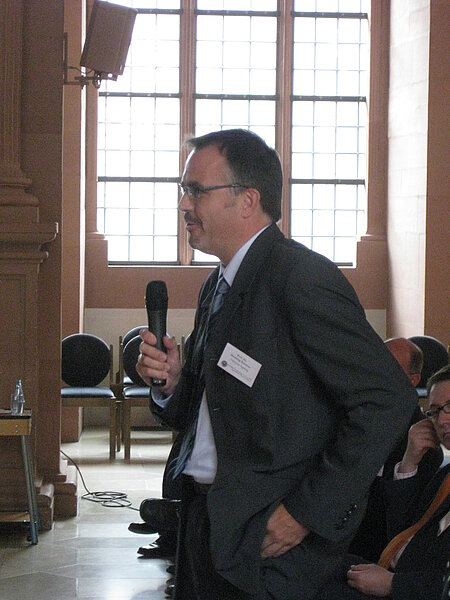
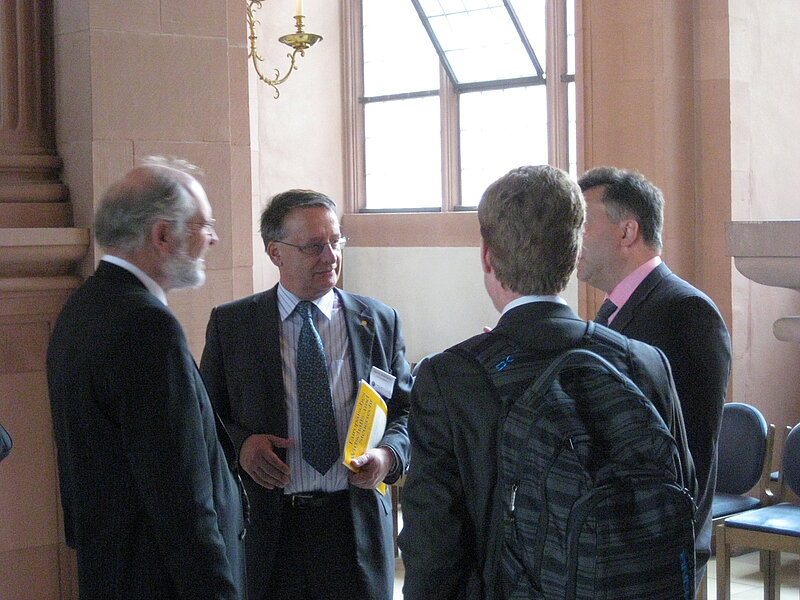
Programme
19 June 2009 | |
12.00-12.30 pm | Welcome |
12.30-13.30 | Biomedical research in Europe and the legal requirements: Help or hindrance? Prof. Dr Martin Lohse, Rudolf Virchow Centre, University of Würzburg |
13.30-14.30 | Different (legal) cultures - uniform research? Prof Dr Rudolf Streinz, University of Munich |
14.30-15.30 | The reference to "fundamental ethical principles" as a European embryo protection concept? Prof. Dr Lothar Michael, University of Düsseldorf |
15.30-16.00 hrs | COFFEE BREAK |
16.00-17.00 hrs | The Seventh Research Framework Programme and its problems Prof. Dr Brigitte Tag, University of Zurich |
17.00-18.00 hrs | The status of research in the European Charter of Fundamental Rights and the ECHR Prof. Dr Carsten Nowak, University of Siegen |
20 June 2009 | |
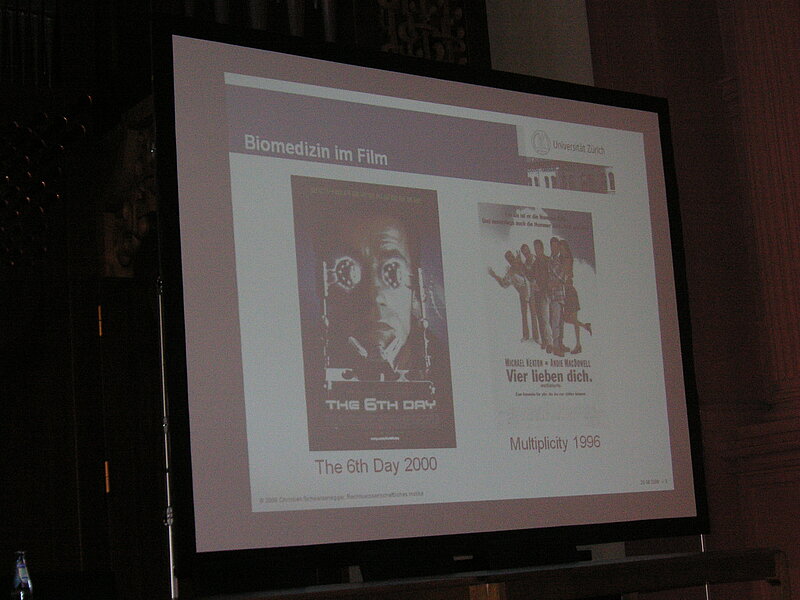
08.30-09.30 a.m. | Restriction of medical research through criminal law? Prof Dr Christian Schwarzenegger, University of Zurich |
09.30-10.30 a.m. | Research on non-consenting persons as a legal possibility Prof Dr Henning Rosenau, University of Augsburg |
10.30-11.00 a.m. | COFFEE BREAK |
11.00-12.00 a.m. | Restriction of research by European law using the example of genetic engineering Prof Dr Winfried Kluth, University of Halle-Wittenberg |
12.00-13.00 | Can European requirements force national legislators to take action? Prof Dr Gerhard Dannecker, University of Heidelberg |
13.00-13.30 | LUNCH BREAK |
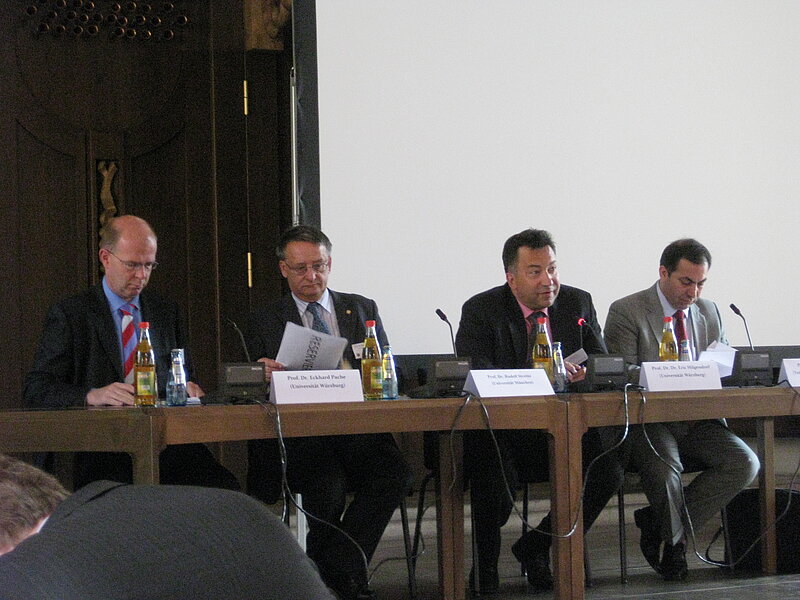
13.30-15.00 | PANEL DISCUSSION: Research and its moral and legal limits: In doubt for freedom? In doubt for the patients? In doubt for profit? Prof Dr Jörg Hacker (President of the Robert Koch Institute) Prof Dr Eckhard Pache (University of Würzburg) Prof Dr Yener Ünver (Yeditepe University, Turkey) Prof Dr Dr Eric Hilgendorf (University of Würzburg) |
Biotechnological challenges and legal response options
Preliminary studies on a legal theory of human biotechnology.
As part of the funding priority "Ethical, Legal and Social Aspects of Modern Life Sciences and Biotechnology" (ELSA), the Federal Ministry of Education and Research is funding the two-and-a-half-year project "Biotechnological Challenges and Legal Response Options. Preliminary studies on a legislative theory of human biotechnology".
The aim of the research project is to develop a legislative theory for the field of biotechnology. It will examine which factors are decisive for successful regulations in this area and whether there are connections between certain characteristics of a regulatory area and certain forms of state regulation.
Accordingly, the following questions in particular are to be clarified and answered: What legal options does the state have to respond to new biotechnological challenges? Which factors are decisive for the success of a regulation? Is there a connection between certain characteristics of a regulatory area and certain forms of state response? Should there be such a connection?
The aim is to provide legislators with clear and verifiable criteria for determining which form of regulation is most suitable for which regulatory matter. The special problems of biotechnology law must be taken into account. In addition to the rapid progress of knowledge and the particular potential for endangering legal interests protected by fundamental rights, ethical questions arise in particular, which often make it difficult to reach a consensus in the legislative process.
The investigation is of a legal-political and legislative-theoretical nature. It will build on existing work on legislative theory, in particular work on the choice of legal form and risk regulation. An "error analysis" of already enacted legislation will also be carried out.